Can Dogs Eat Watermelon? What the Flesh Gives Your Dog, and What to Cut Away First
Medically reviewed by Justin Shmalberg, DVM, CVA, ACVN, ACVSMR — For general education — not a substitute for veterinary care.
Yes, dogs can eat watermelon safely, as long as you skip the seeds and rind and keep the portion small.

On this page
Yes, dogs can eat watermelon safely, as long as you skip the seeds and rind and keep the portion small. That’s the whole answer. The part worth sitting with is why the seeds and rind matter more than most owners expect, and why a fruit this hydrating still isn’t doing the job people sometimes hope it’s doing.
The Short List Before You Cut a Slice
- Cube the flesh only — no rind, no seeds, no sugary syrup or salt.
- Watch the portion. Treats, watermelon included, should stay under about 10% of a dog’s daily food.
- Go slow the first time. A new food, even a gentle one, can loosen a sensitive dog’s stool.
- Ask your vet first if your dog manages diabetes or kidney disease — natural sugar and potassium still count.
- Skip it entirely if a dog tends to gulp treats whole; seedless or not, big chunks are a swallowing risk.
Each of those deserves a little more than a bullet, so let’s walk through them.
A Hot Afternoon, a Cored Wedge
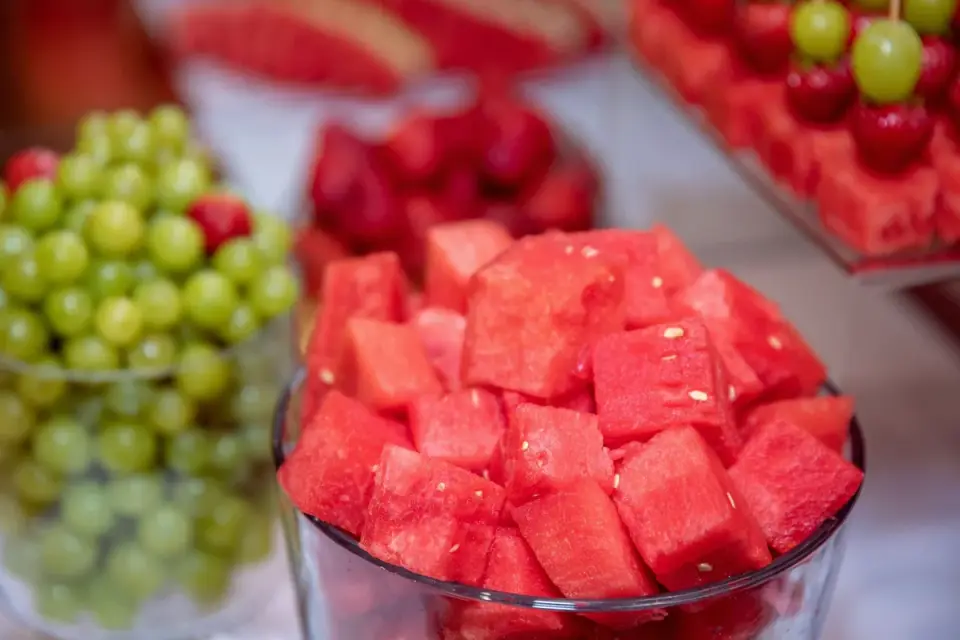
Imagine a July backyard, the kind where the grass has gone a little crunchy and the dog has parked himself in the shade of the porch. Someone slices a watermelon for the family, and the dog’s ears go up at the sound of the knife. The easy move is to cut a seedless heart-of-the-melon cube, no rind attached, and hand it over instead of tossing the whole rind-on wedge his way. It settles the moment without a debate about whether he can handle the tougher parts. That small substitution — flesh only, nothing else — is really the entire safety question this guide is answering, and it’s worth treating as a habit rather than a one-time judgment call.
What a Cup of Watermelon Actually Adds to the Bowl
Watermelon is close to 92% water, which is the honest headline here: this is a hydration treat first, a nutrient source a distant second. It does carry vitamin A, vitamin C, and potassium, plus a modest amount of fiber, and none of that is unwelcome in a dog’s diet. But the quantities in a few cubes are small relative to what a complete dog food is already formulated to provide. American Kennel Club guidance frames watermelon flesh as an acceptable occasional treat for that reason — a nice-to-have, not a nutritional cornerstone, as the American Kennel Club notes. If you’re already comparing produce against produce for your dog’s bowl, the same logic shows up in how much sweet potato realistically adds versus how it’s cooked and portioned.
Two Dogs, Two Rinds
Picture two dogs at the same picnic. One gets handed a clean, seedless cube; the other snags a dropped rind off the ground before anyone notices. The first dog is fine. The second may vomit, strain to pass stool, or in a worse version of that story, need imaging and possibly surgery to clear a blockage. That gap isn’t about luck — it’s about which part of the fruit each dog actually ate. The flesh is soft and digestible. The rind is fibrous, tough, and exactly the shape and size that gets lodged in a smaller dog’s intestine. That contrast is the whole reason this topic gets its own article instead of a one-line yes.
Where the Rind and Seeds Actually Cause Trouble
According to the PetMD overview, both watermelon rind and swallowed seeds can lead to gastrointestinal blockage, and rind in particular is hard for a dog’s gut to break down. A stray seed or two is unlikely to cause a problem for most adult dogs. A handful of seeds, or a chunk of rind swallowed by a small dog, is a different situation — one that can mean a vet visit rather than a quiet afternoon. The fix isn’t complicated: cube the middle, bin the rest, and don’t let watermelon rind sit within reach of a counter-surfer.
Skip the sugar bowl trick, too. A dog doesn’t need salt, honey, or a sprinkle of anything on fruit that’s already sweet on its own.
Why a Slice of Fruit Isn’t a Substitute for a Real Supplement
Here’s where I’ll push back on a habit I see in a lot of well-meaning feeding routines: treating a fruit like watermelon as if it’s doing supplement-level work on digestion or gut health. It isn’t, and the fiber math makes that clear — a few cubes simply don’t carry enough fiber to meaningfully shift a dog’s microbiome the way a formulated digestive product is designed to. Even purpose-built products don’t move every dog the same way. A 2025 trial in the Frontiers in Veterinary Science probiotic response trial tracking dogs’ response to a probiotic found that diversity metrics did not distinguish non-responders from responders — meaning even a targeted supplement doesn’t guarantee a uniform gut-health outcome, let alone a slice of fruit. If a dog’s stool has been consistently loose or hard, that’s a conversation for your vet, not a watermelon experiment. And if fiber intake is already a live question in your house, it’s worth reading how much is too much fiber before adding more from any source, fruit or supplement alike.
That distinction matters even more for a senior dog whose digestion has gotten choosier with age. If you’re already navigating a food transition for an older dog, watermelon is a fine treat to keep in the rotation, but it isn’t a reason to slow down or skip a planned senior food switch — the two aren’t solving the same problem.

The Bottom Line
So: cube it, seed it, skip the rind, keep it small, and enjoy watching a dog go a little goofy over a cold treat on a hot day. That part is genuinely nice, and there’s no reason to talk yourself out of it. Just hold the line on what watermelon is and isn’t — a hydrating, low-calorie snack, not a fiber fix and not a supplement. If your dog’s digestion needs more support than a fruit can offer, that’s a conversation worth having with your veterinarian, not a bigger slice.
Frequently asked questions
Can puppies eat watermelon?
In small, seedless, rindless pieces, yes, once a puppy is eating solid food. Start with a single small cube and watch for loose stool before offering more.
Is frozen watermelon okay for dogs?
Frozen seedless cubes are a common warm-weather treat and are generally fine, though very cold pieces can be hard on a dog that gulps rather than chews.
Sources
- Can Dogs Eat Watermelon? Is Watermelon Safe for Dogs? — American Kennel Club
- Can Dogs Eat Watermelon? Benefits and Risks — PetMD
- Frontiers in Veterinary Science probiotic response trial — Frontiers in Veterinary Science