
On this page
Renee hears Tata pacing the hallway near midnight in San Bernardino. Tata, a 3-year-old spayed female Basenji mix, pants softly and circles the couch for almost 20 minutes after the house quiets. Renee weighs an extra late walk against simply turning the lights low and opening Tata’s corner bed.
Sit with that worry for a moment. The pacing feels loud in a quiet house. Vets often see this pattern when evenings turn unpredictable, with restlessness that fades once the night holds the same shape.
Settle the room first, or settle the moment first?
That choice shapes everything else. A one-off trick may interrupt whining for tonight. A settled room teaches the nervous system what comes next.
For most homes, the room wins. Keep feeding, walks, and lights-out within the same hour each night. Predictability lowers sympathetic arousal by giving the brain fewer surprises to scan for. It will not erase a true noise phobia or separation distress on its own, and that limit matters when you set expectations by function: calmer evenings, easier settling, not total silence during storms.
If you want background on chew options, this guide to dog calming chews walks through label reading without hype.
Why a steady rhythm calms the body
Tension lives in muscle as much as in mood. From a manual-medicine view, shallow breathing and braced shoulders keep the stress loop going. Slow, repeated cues — same blanket, same low lamp, same quiet word — invite longer exhales and softer posture. That shift may help support a resting state, though it cannot stretch a tight hip or quiet joint discomfort past its mechanical limit.
Keep the sequence short enough to repeat. Potty, brief sniff walk, water, bed. The same order matters more than the length.
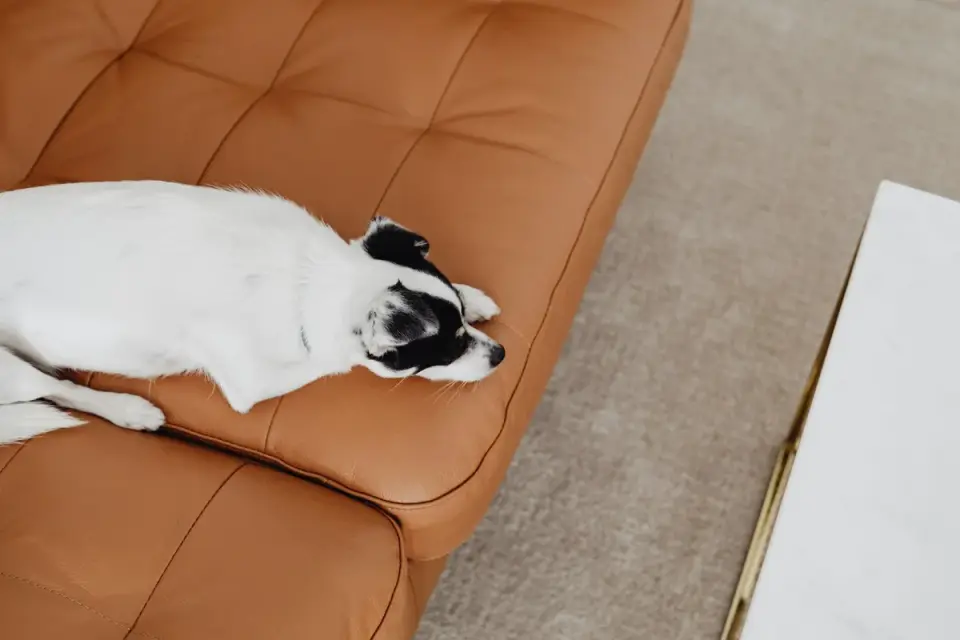
What a retreat corner looks like in real homes
Pick one protected spot away from doorways. A crate with the door open, a pen in a dim bedroom corner, or a mat behind the couch all work when the dog chooses to enter freely.
Make it boring in a good way. Same bedding washed on the same day each week, a water bowl nearby, low background sound. Practice entry during calm daylight with a chew or stuffed toy, not only when fear spikes. For simple enrichment ideas, these easy DIY toys give busy mouths a quiet job.
That corner does the talking when you cannot.
Leave the dog free to leave. Confinement that removes choice often raises vocalizing and barrier scratching, which tells you the function has flipped from refuge to trap.
Where herbs and food-first support fit in
Food-first means steady meals, adequate protein, and a calm feeding spot before adding anything else. Once that base holds, some families ask about botanicals for evening restlessness.
Chamomile and Valerian Root have been used in traditional herbal care to support relaxation. The National Center for Complementary and Integrative Health describes chamomile’s traditional use for calm and notes ongoing study of its properties. The NIH Office of Dietary Supplements summarizes valerian’s traditional use for restlessness and sleep support, with mixed evidence for effect.
That history explains interest without promising sedation. A tea-based powder or chew may help maintain a settled evening routine for some dogs. It will not replace desensitization for storm fear or change nighttime waking driven by pain, thirst, or need to urinate. If you are curious about sleep pathways, this review of melatonin for dogs explains what it regulates and where evidence thins.
Talk with your veterinarian before combining products, especially for older dogs on daily medication or dogs with liver or kidney disease.
A short plan for tonight
Dim the lights at the same time. Offer a brief potty trip, then invite Tata-style settling to the chosen spot with a familiar chew. Sit nearby and breathe slowly. No extra commands, no coaxing.
Track one function for ten nights: minutes to lie down, or number of midnight pacing loops. Small, steady drops count. If panting intensifies, appetite falls, or restlessness spreads into daytime, schedule a veterinary visit to rule out pain or medical causes.
Lasting relief looks ordinary. Same hour, same corner, same quiet voice — repeated until the house itself signals safety.
Frequently asked questions
How long before a new routine helps my dog settle?
Track minutes to lie down over ten nights. Many homes see steadier settling within one to two weeks when timing and place stay consistent, with slower progress for noise fear.
Should I close the crate door when my dog paces at night?
Keep the door open when the goal is calm. A retreat supports rest when entry stays voluntary. Closed confinement that raises scratching or vocalizing signals a need for a different setup and veterinary input.